Introduction
Portable electronic devices have become part of everyday life. A single person may carry a smartphone, charging cable, power adapter, wireless earbuds, USB drive, portable battery, and several other small accessories. When these items are placed together in a backpack, handbag, or suitcase without a dedicated storage system, they can quickly become difficult to organize. Cables may tangle, small adapters can disappear between larger belongings, and frequently used accessories may take longer to find than expected.
An electronic organizer bag offers a simple way to manage these everyday items. Rather than carrying loose accessories in different pockets, users can keep compatible equipment together in one dedicated pouch. This can be particularly helpful during business trips, holidays, daily commuting, school, or work away from home.
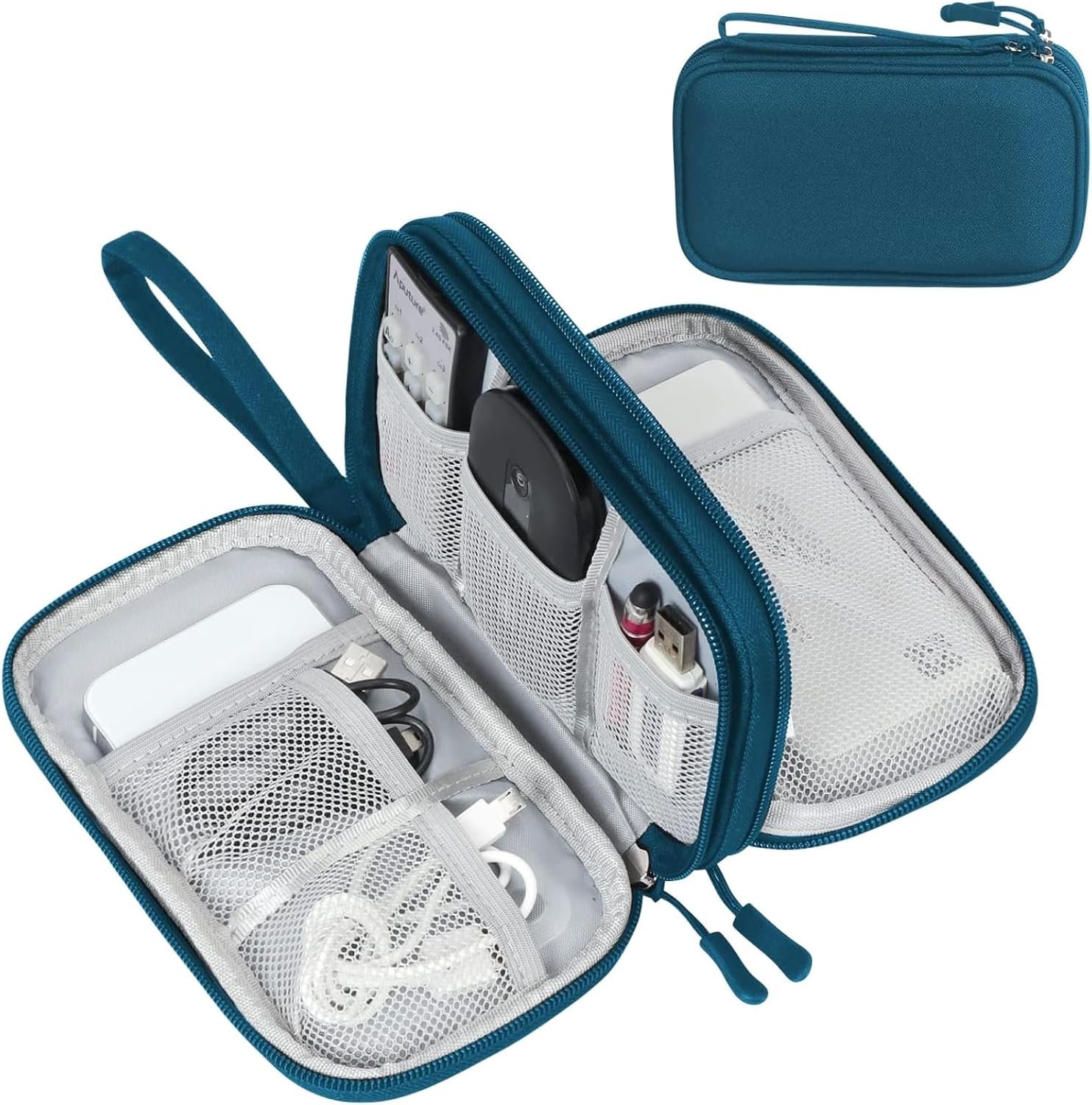
The FYY Electronic Organizer, Travel Tech Pouch Bag in Dark Green, is designed for people looking for a dedicated place to store and transport electronic accessories. Its product category focuses on portable organization rather than replacing a protective case designed for an individual device. The general purpose is to help users arrange smaller technology essentials so they can be accessed more conveniently when needed.
However, choosing a tech pouch involves more than selecting a color or checking the product name. Internal storage arrangements, overall dimensions, material construction, closure design, and the size of the accessories being carried can all influence whether a particular bag is appropriate. A pouch that works well for charging cables and small adapters may not be suitable for bulky chargers, large power banks, or full-size electronic equipment.
This guide explores the purpose of the FYY electronic organizer, its potential everyday applications, the characteristics worth checking, and the differences between general categories of tech storage. Because product specifications and included features should be verified against the current listing, the discussion distinguishes common benefits of electronic organizer bags from details that need confirmation for this specific model.
Understanding the FYY Electronic Organizer
The FYY Electronic Organizer is an accessory-storage product intended to keep small electronic items together during everyday use and travel. The listed dark green color provides an alternative to more common black or gray storage accessories, although appearance is only one consideration when choosing an organizer.
A tech pouch typically serves as an intermediate layer of organization. It sits inside a larger bag, backpack, suitcase, or carry-on and holds smaller items that would otherwise be loose. Instead of searching through a main compartment for a charging cable or adapter, a user can take out the organizer and access the items stored inside.
This arrangement may be useful for people who frequently move between different locations. Someone working from home one day and from a shared office the next, for example, may need to carry several charging accessories without packing an entire equipment bag. A traveler may also want to keep cables and adapters in one place so they are easier to locate during a journey.
An electronic organizer is not necessarily a protective case for every item it contains. Unless the manufacturer explicitly specifies otherwise, users should not assume that a tech pouch provides impact protection, waterproof construction, or enough padding for delicate equipment. These properties depend on the actual design and materials.
The most practical way to evaluate this type of product is to consider the accessories you already own, determine how much space they require, and compare those needs with the organizer’s confirmed dimensions and internal layout.
Key Features of an Electronic Organizer Travel Pouch
The following sections explain the features commonly associated with this type of accessory bag and why they may matter. Exact construction details for the FYY model should be confirmed through its current Amazon listing rather than inferred from the product category alone.
1. Dedicated Storage for Electronic Accessories
One of the main purposes of an electronic organizer is to give small technology accessories a consistent storage location.
Charging cables, USB adapters, memory cards, compact dongles, and similar items can be difficult to manage when they are mixed with documents, clothing, toiletries, and other belongings. A dedicated pouch creates a separate space for these smaller accessories.
This arrangement can help users develop a simple packing routine. For example, charging equipment can be returned to the same organizer after work or travel instead of being left on a desk or placed in a different pocket each time.
The benefit depends on the internal design. Some organizers use elastic loops, mesh pockets, dividers, or combinations of these arrangements. Other models may prioritize one larger compartment. Review the current product photographs and description to determine which storage features the FYY bag actually includes.
A suitable layout should make it possible to identify and retrieve frequently used items without requiring the entire contents to be removed.
2. A Compact Format for Travel
Travel accessories often need to balance storage capacity with portability. A large case can hold more equipment, but it also occupies more space in luggage. A smaller pouch is easier to carry, although it may require users to leave bulky or rarely used items behind.
Electronic organizer bags are generally intended to consolidate small accessories into a manageable package that fits inside a larger bag.
For a weekend trip, this might mean carrying the charging cables and adapters needed for a phone, earbuds, and other portable devices. For a business traveler, the contents might include a laptop charging accessory, a few cables, and a USB adapter, depending on the pouch’s capacity.
The exact dimensions of the FYY organizer should be checked before purchase. Product names do not establish how much usable space is available, and the thickness of the bag when filled may differ from its empty dimensions.
If the pouch will be used inside a small personal bag or a crowded carry-on, compare its measurements with the available space rather than relying on photographs alone.
3. Organization Through Separate Compartments
Separate compartments can make a tech pouch easier to use because different accessories have different storage needs.
A short charging cable may fit neatly in a small section, while a larger adapter needs a deeper space. A USB drive or memory card may be easier to locate when it has a dedicated pocket instead of being mixed with longer cables.
Some electronic organizers use multiple layers or dividers to separate these items. Whether the FYY model has particular pocket configurations, elastic straps, or mesh sections should be confirmed on the current listing.
The goal is not necessarily to use every compartment. A practical layout allows users to group accessories according to how often they are needed, their shape, or their function.
For example, charging equipment could be kept together, while storage devices and small adapters occupy another section. This makes it easier to identify missing items before leaving home or a hotel.
When evaluating a pouch, consider whether the compartments fit your accessories individually. A bag can have several pockets but still be inconvenient if they are too narrow for your chargers or too shallow for the items you want to carry.
4. Dark Green Appearance
The FYY organizer is identified as dark green, giving it a distinct appearance compared with conventional neutral-colored tech accessories.
Color can be a practical consideration as well as a matter of personal preference. Someone who carries several similar bags may find a different color easier to recognize in a backpack or suitcase. A distinctive pouch may also be easier to identify when unpacking several accessories on a desk.
The appearance of dark green can vary slightly depending on lighting, display settings, and the materials used. Product photographs provide a general reference, but the actual shade may not look identical on every screen.
Color does not establish durability, water resistance, or protective performance. Those characteristics depend on the bag’s construction and should be evaluated separately.
If the pouch will be used with other travel accessories, users may also consider whether the color makes it easy to distinguish from similar bags. This is a minor point, but it can be helpful when organizing a collection of travel equipment.
5. Portable Storage for Cables and Small Devices
Cables are among the most common items stored in a technology pouch. Their flexible shape makes them easy to carry, but loose cables can become tangled with one another or wrapped around other belongings.
A dedicated organizer can help keep charging cables and other compatible accessories together. Depending on the layout, users may be able to separate short cables from longer ones or keep connectors from becoming mixed with small adapters.
Cable management still depends on how the items are packed. Wrapping cables loosely, avoiding sharp bends, and securing them with suitable ties can help reduce tangling and unnecessary strain.
Small electronic accessories may also be stored in the pouch, provided they fit comfortably and the internal design is appropriate for them. However, the organizer should not be treated as a substitute for a device-specific protective case.
Items with fragile screens, exposed connectors, or delicate surfaces may require additional protection. If a power bank or charger has sharp edges or a substantial weight, make sure it does not press against more delicate accessories.
6. A Closure System for Everyday Carry
A travel tech pouch needs a way to keep its contents contained during movement. Many bags in this category use zippers or another closure mechanism, but the exact closure design of the FYY model should be verified from the current product listing.
A secure closure helps prevent small items from falling out when the organizer is removed from a backpack or placed on a desk. It also allows the pouch to function as a single unit rather than a collection of loose accessories.
When selecting an organizer, consider whether the opening is wide enough to see the contents and remove items comfortably. A pouch can hold the right equipment but still be inconvenient if its opening makes access difficult.
Avoid overfilling the bag to the point where the closure is under excessive tension. Overpacking can place strain on seams and zippers and may also make the organizer harder to fit into a larger bag.
7. Material and Construction Considerations
The material used in an electronic organizer influences its weight, flexibility, surface feel, and ability to handle routine use.
The exact material composition of this FYY model should be checked through the product description or manufacturer documentation. It would be inappropriate to assume a particular fabric, lining, padding thickness, or coating solely from the product title.
For everyday travel, users may want a material that can tolerate regular handling and occasional contact with other items in a backpack. The quality of stitching, zipper construction, and attachment points may also affect how the bag performs over time.
If the organizer is likely to be carried frequently, look for clear information about its construction and care requirements. A pouch that is easy to clean may be convenient for commuters and travelers, but cleaning methods should follow the manufacturer’s instructions.
Material descriptions should also be distinguished from performance claims. A fabric described as water-resistant does not necessarily make a bag waterproof, and a soft exterior does not automatically provide meaningful impact protection.
8. Separation From Other Travel Belongings
Another practical role of a tech pouch is to keep electronic accessories separate from unrelated items.
Without a dedicated storage area, cables and adapters may become mixed with pens, coins, documents, toiletries, or other small belongings. This can make accessories harder to find and may expose them to substances or objects that could cause damage.
A separate organizer allows users to create a simple boundary between technology accessories and the rest of their luggage.
For example, someone carrying a backpack to work could keep charging equipment in the pouch while storing stationery and personal items in other compartments. During travel, the organizer could remain with the carry-on rather than being scattered among different bags.
This benefit is primarily organizational. It does not mean that a tech pouch provides protection against spills or prevents all forms of physical damage. Liquids should still be stored separately, and delicate equipment should be protected according to its needs.
How the FYY Electronic Organizer Can Be Used
An electronic organizer can support several everyday routines. The most suitable arrangement depends on the devices you use, how often you travel, and the amount of equipment you need to carry.
1. Organizing Everyday Charging Accessories
Many people carry at least one charging cable and adapter whenever they leave home. Others bring additional accessories for wireless earbuds, tablets, portable batteries, or secondary devices.
A tech pouch can provide one place for these items. Rather than keeping a cable in a jacket pocket, an adapter in a backpack compartment, and another accessory in a desk drawer, users can establish a consistent storage location.
To create a practical everyday setup, begin with the accessories you use most often. Include the necessary charging cable, compatible adapter, and any small connector or dongle that is genuinely useful during the day.
Avoid filling the pouch with equipment that is rarely needed. Carrying fewer items can make it easier to locate the accessories that matter and leave more space for other belongings.
Before choosing the FYY organizer for this purpose, verify that its dimensions and compartment arrangement suit your charging equipment.
2. Packing for Holidays and Weekend Trips
Travel can create a greater need for organization because the same bag may contain clothing, toiletries, documents, chargers, and personal items.
A dedicated electronic organizer allows travelers to group smaller technology accessories together before placing the pouch inside their luggage.
A typical travel arrangement might include phone charging equipment, a cable for a tablet or e-reader, a USB adapter, and compact accessories for headphones. The precise selection depends on the devices being carried and the availability of compatible charging equipment at the destination.
Before packing, check which accessories are necessary for the trip. Some travelers may need only one cable and adapter, while others need different connections for multiple devices.
Keep the organizer accessible if the items will be used during transit. At the same time, avoid placing it where heavier objects can crush delicate accessories.
The pouch can help simplify packing, but it does not replace checking that chargers and cables are compatible with the devices and power outlets being used.
3. Keeping a Work Bag Organized
People who move between home, an office, a coworking space, and client locations may need to carry technology accessories regularly.
A dedicated pouch can make it easier to transfer essential items between bags without forgetting individual cables or adapters. Rather than repacking each accessory separately, users can move the organizer as one unit.
For example, a work pouch could hold the charging accessories used with a laptop, a phone cable, and a small adapter required for presentations or file transfers. Its contents can be adjusted to match the person’s routine.
A useful approach is to create a standard set of essentials and return everything to the same compartment after use. This makes it easier to notice when an item has been left at a meeting room or workspace.
If the pouch is intended to carry a laptop power adapter, check the adapter’s dimensions and weight. Some power supplies are too bulky for smaller tech organizers, and the actual internal capacity may be less than the exterior measurements suggest.
4. Managing Gaming and Entertainment Accessories
Portable entertainment equipment often involves several small accessories. These may include charging cables, earbuds, USB connectors, and compact adapters.
A tech pouch can help keep compatible accessories together when traveling with a handheld gaming device, tablet, or other portable entertainment equipment.
However, larger controllers, full-size headphones, and handheld consoles may require more space than a small accessory pouch provides. Do not assume that the FYY organizer is designed to carry these larger devices unless its dimensions and product information explicitly support that use.
A pouch intended for accessories can be used alongside a separate protective case for the main device. This arrangement separates the equipment that needs a dedicated protective shell from smaller items that benefit primarily from organization.
When packing, prevent heavy adapters from pressing against fragile cables or delicate connectors. Keeping the accessories grouped neatly can make the setup easier to unpack at a hotel, shared workspace, or entertainment area.
5. Storing Small Computer Accessories
Computer users often accumulate accessories such as USB drives, adapters, card readers, charging cables, and compact connectivity devices.
These items are easy to misplace because they are small and may not have an obvious permanent storage location. A tech pouch provides a consistent place to keep compatible accessories between projects.
Someone who frequently uses more than one computer might organize the pouch according to function. For instance, cables could be stored together while small adapters and removable storage devices occupy separate compartments, if the bag’s layout supports that arrangement.
The aim is to make accessories easier to find without carrying unnecessary equipment. Before packing a USB adapter or connector, verify that it is compatible with the computer and the intended task.
For items containing sensitive data, remember that a storage pouch is not a security device. Portable drives and memory cards should be protected through appropriate data security practices, especially when traveling.
6. Creating a Dedicated Travel Charging Kit
Some users prefer to maintain a separate set of charging accessories for travel rather than repeatedly removing items from their everyday setup.
An electronic organizer may be suitable for storing that dedicated collection. A travel kit could contain the cables and adapters required for the devices usually taken on trips, along with any small connection accessories that are useful at the destination.
This arrangement can reduce the number of decisions required before leaving home. Instead of collecting individual cables each time, a traveler can check the pouch and confirm that the standard kit is ready.
The contents should still be reviewed before longer journeys. A trip involving additional devices, international destinations, or work presentations may require equipment that is not part of the usual kit.
If a universal travel adapter or power bank is included, verify its dimensions, capacity, and relevant travel requirements. The pouch itself does not establish whether the electrical accessories are compatible or permitted under applicable travel rules.
7. Organizing a Home Office Drawer
A tech pouch does not have to be used exclusively for travel. It can also serve as a small storage unit for accessories that are frequently moved between rooms or work areas.
For example, a person might keep spare charging cables, compact adapters, and other small technology accessories together instead of leaving them loose in a desk drawer.
The pouch can be particularly useful when the same accessories are used in different locations. When it is time to work elsewhere, the user can take the organizer without searching for each item individually.
For a permanent desk setup, however, a desktop organizer or drawer tray may be more practical if the accessories rarely leave the room. The choice depends on whether portability or fixed storage is the main priority.
8. Maintaining a Small Emergency Accessory Kit
Some people carry a few spare technology accessories for unexpected situations. A spare charging cable, compatible adapter, or small connection accessory may be useful when a primary item is unavailable.
A compact organizer can provide a place for these backup items without requiring a large equipment bag.
The kit should be limited to accessories that are genuinely useful. An excessive collection of duplicate cables and adapters adds bulk and makes it harder to find the item needed at the moment.
Periodically inspect the contents to confirm that the accessories still work and remain compatible with current devices. Replace damaged cables and remove obsolete connectors that no longer serve a purpose.
The FYY organizer may be considered for this role if its confirmed capacity suits the intended collection.
Who May Find This Type of Tech Pouch Useful?
Frequent Travelers
People who travel regularly often carry multiple small accessories and need to unpack them in different environments.
A dedicated tech pouch can help group those accessories together and make them easier to retrieve from luggage. It may also support a consistent packing routine, especially for travelers who carry similar devices on most trips.
The most important consideration is capacity. Travelers with several large chargers, bulky power banks, or multiple device-specific accessories should verify the dimensions before choosing a compact organizer.
Business Professionals and Remote Workers
Professionals who work from different locations may appreciate having a portable collection of cables and adapters.
A pouch can move between a backpack, briefcase, and home-office desk without requiring each accessory to be packed separately. This may be particularly useful for people who attend meetings, visit clients, or work in shared spaces.
The organizer is most practical when its contents reflect the user’s actual working routine. Someone who relies on a particular display adapter, for example, should confirm that it fits comfortably alongside the necessary cables.
Students
Students may need to carry charging equipment and small computer accessories between home, classrooms, libraries, and study spaces.
A dedicated pouch can help keep these items together and reduce the likelihood of leaving a cable in a classroom or shared workspace. It can also make a backpack easier to organize when books, stationery, and technology accessories are carried together.
Students should choose a layout that accommodates their equipment without taking up too much of the available bag space.
Digital Creators and Technology Enthusiasts
People who work with cameras, computers, audio equipment, or other technology may carry several adapters and cables that serve different purposes.
An organizer can help separate small accessories from larger equipment. However, camera bodies, lenses, microphones, and other delicate or expensive devices generally require storage solutions specifically designed for their size and protection needs.
A small tech pouch may be more appropriate for accessories than for the primary equipment itself.
Everyday Commuters
Commuters who use electronic devices throughout the day may benefit from keeping charging accessories and compact adapters in one place.
The pouch can be stored in a backpack or work bag and removed when needed. Its dark green color may also help distinguish it from other accessories, depending on the user’s collection.
Commuters should consider how much equipment they actually use each day. A smaller, carefully selected collection may be more convenient than carrying every available cable and adapter.
People Who Prefer Organized Storage
Some users simply prefer having a designated place for small belongings. A tech pouch can support that preference by keeping electronic accessories separate from the rest of a bag.
It may be particularly helpful for people who frequently change bags or move between workspaces.
However, a dedicated pouch is not essential for everyone. Someone who carries only one charging cable may find an existing pocket sufficient. The value of an organizer depends on whether it solves a real storage problem.
Important Things to Consider Before Choosing the FYY Organizer
1. Confirm the Dimensions
Dimensions are among the most important specifications for any storage bag.
A pouch that looks spacious in photographs may have limited internal capacity, particularly when dividers, pockets, or padded sections reduce the available space. External dimensions also do not necessarily indicate the amount of usable room inside.
Check the current listing for the bag’s length, width, and thickness. Compare those measurements with the largest accessories you intend to carry.
If you plan to store a power adapter or power bank, measure it first. Consider not only whether the item fits but also whether there is enough room for cables and other accessories without putting pressure on the closure.
2. Examine the Internal Layout
The internal arrangement should match the items you want to organize.
Elastic loops can be useful for securing cables, while pockets may help separate adapters and small accessories. Larger open sections can accommodate irregularly shaped items, but they may provide less separation.
The exact layout of the FYY organizer should be confirmed through the current product photographs and description.
Think about how you retrieve accessories. Frequently used items should be easy to access, while backup cables or less commonly used adapters can occupy less accessible sections.
A useful layout is one that supports your habits rather than simply offering the greatest number of compartments.
3. Understand the Difference Between Organization and Protection
A tech pouch is primarily a storage and organization accessory. It may help prevent loose items from becoming tangled or mixed with other belongings, but that does not automatically make it a protective case.
If the bag contains padded sections, their presence and intended level of protection should be confirmed. Do not assume that the organizer protects against drops, crushing, or impact.
Fragile electronics should be stored in suitable protective cases when necessary. Heavy accessories should also be positioned so they do not press against delicate items.
For example, a power bank placed beside a small adapter may be manageable if the contents are arranged carefully, but a loose collection of hard objects can shift during travel.
4. Verify Water-Resistance Claims
Travel bags may be described using terms such as water-resistant, splash-resistant, or waterproof. These terms are not interchangeable.
The product title or general category alone does not establish the level of water protection offered by the FYY organizer. Check the current listing for explicit information about the material and any stated limitations.
Even when a product has water-resistant construction, that does not necessarily mean it can withstand immersion, prolonged exposure to rain, or liquid entering through its closure.
For electronics, water exposure can cause damage even when the outer surface appears dry. Keep the pouch away from spills and follow the manufacturer’s care instructions.
If the accessories are especially valuable or sensitive to moisture, consider additional protective storage rather than relying entirely on the organizer.
5. Consider Cable Length and Accessory Shape
Cable length can influence how much room an organizer needs. A short charging cable may fit easily, while a longer cable can occupy a substantial portion of the available space.
Adapters also vary in shape. Some are slim and rectangular, while others have bulky housings or fixed plugs that make them harder to pack.
Before selecting the bag, group the accessories you intend to carry and estimate the space they require. Wrap cables loosely and avoid forcing them into compartments that are too small.
If a cable needs to be sharply bent to fit, use a different arrangement or choose a larger storage solution. Repeated sharp bends can place stress on the cable and its connectors.
6. Review the Closure and Stitching
The closure and seams are important parts of a portable organizer because they experience repeated use.
Check the listing for available information about the closure design and construction. If detailed information is not provided, avoid assuming a particular zipper type, reinforcement method, or durability level.
Do not overfill the bag. A pouch that is packed too tightly may become difficult to close, and unnecessary tension can place strain on the closure and seams.
For frequent travel, these practical construction details may be more relevant than decorative features.
7. Check the Weight and Packed Thickness
The empty weight of a pouch is only part of the overall carrying burden. The accessories placed inside can add considerably more weight and thickness.
If the organizer will be carried every day, consider whether the packed arrangement remains comfortable inside your usual bag. A pouch that fits easily when empty may occupy more space once cables and adapters are added.
This is particularly important for travelers using a small personal bag or commuters who carry a laptop and other equipment.
Check the available product measurements and consider how the pouch will fit alongside other belongings.
8. Think About Cleaning and Care
Travel accessories can accumulate dust and surface marks through regular use. The appropriate cleaning method depends on the materials and construction.
Check the manufacturer’s care instructions before using cleaning products or applying moisture. Some materials may require gentle spot cleaning, while others may have different limitations.
Avoid assuming that a pouch can be machine-washed or submerged in water unless the manufacturer explicitly confirms that it is safe to do so.
Keeping the organizer dry and removing debris periodically can help maintain its condition.
9. Compare the Current Product Information
Before making a decision, review the current Amazon listing for the FYY Electronic Organizer in dark green.
Confirm the dimensions, internal arrangement, material description, closure type, and any explicitly stated water-resistance or protective features. Product photographs can help illustrate the design, but written specifications are important when sizing and compatibility matter.
If a feature is important and the listing does not clearly confirm it, treat it as unknown. This is more reliable than assuming that every tech pouch includes the same accessories or construction.
Comparing General Categories of Electronic Storage Bags
Electronic accessories can be stored in several different types of bags and organizers. Each category serves a somewhat different purpose.
Compact Cable Organizers
Compact cable organizers are designed primarily for cables, charging cords, and a small selection of related accessories.
Their smaller format can be convenient for people who carry only a few essential items. They may take up less space than a larger electronics pouch, particularly inside a small backpack or handbag.
The limitation is capacity. A compact organizer may not accommodate bulky power adapters, larger power banks, or several different device accessories.
This category may suit users who prioritize a minimal everyday setup rather than carrying a broad collection of equipment.
Multi-Compartment Tech Pouches
Multi-compartment tech pouches aim to accommodate a broader range of small electronic accessories.
Depending on their design, they may offer several pockets, elastic sections, dividers, or a combination of storage arrangements. This can help separate cables, adapters, and small accessories.
The trade-off is that additional storage can increase the pouch’s size or complexity. A larger organizer may be less convenient for someone who carries only one or two items.
The FYY electronic organizer belongs to the general electronic accessory pouch category, but its precise internal layout and capacity should be verified before comparing it with other formats.
Protective Electronics Cases
Protective electronics cases are generally designed around a particular device or type of equipment. They may use shaped compartments, padding, rigid shells, or other construction features intended to protect the contents.
A protective case can be appropriate for a delicate device that needs more than basic organization. However, a case designed for a laptop, camera, or handheld console may not provide convenient storage for a collection of small cables and adapters.
Some users choose to combine a protective case for the main device with a separate tech pouch for its accessories. This allows each storage solution to serve a distinct purpose.
General-Purpose Travel Pouches
General-purpose travel pouches are used to store a variety of small belongings, not necessarily electronic accessories.
They may work for cables and adapters if the size and internal arrangement are suitable. However, they may lack dedicated loops or compartments for organizing small technology items.
A tech-specific pouch may offer a more convenient arrangement for frequent device users, while a general-purpose pouch may suit someone who wants one flexible storage accessory for several types of belongings.
The appropriate choice depends on what needs to be stored and how frequently the contents are accessed.
Electronics Accessory Cases With Rigid Construction
Some organizers use a more rigid outer structure to help maintain their shape. Depending on the design, this may offer additional resistance to pressure compared with a soft pouch.
Rigid construction can also make a case bulkier and less flexible when placed inside crowded luggage. The level of protection varies, so users should not assume that every hard-sided case is impact-proof.
If pressure protection is important, compare the construction and stated purpose of the available options. For simple cable organization, a flexible pouch may be sufficient; for delicate equipment, a purpose-built protective case may be more appropriate.
Frequently Asked Questions
1. What is the FYY Electronic Organizer used for?
The FYY Electronic Organizer is intended for storing and transporting electronic accessories. Depending on the available space and internal layout, a tech pouch of this type may be used for charging cables, compact adapters, USB accessories, and other small technology items.
Check the current product listing to confirm its dimensions and specific storage features before selecting accessories for it.
2. Is the FYY organizer suitable for travel?
An electronic organizer can be useful during travel because it groups small accessories in one place instead of leaving them loose in luggage.
The FYY pouch may suit this purpose if its confirmed dimensions and capacity match the items you need to carry. Travelers with bulky chargers or several large accessories should check the measurements carefully before choosing it.
3. Can it hold charging cables and adapters?
Charging cables and compact adapters are common items stored in electronic organizer bags. Whether the FYY model can accommodate a particular collection depends on its internal layout and available space.
Check the product photographs and dimensions, then compare them with your actual accessories. Avoid assuming that every charger or adapter will fit simply because the product is described as an electronic organizer.
4. Does the dark green color affect its practical use?
Color does not determine the organizer’s storage capacity or protective performance, but it can influence appearance and identification.
A dark green pouch may be easier to distinguish from other black or gray accessories in a backpack or suitcase. The exact shade can vary depending on lighting and display settings.
5. Is the organizer waterproof?
Waterproof performance should not be assumed from the product category or color. Check the current listing for an explicit description of the materials and any stated water-resistance limitations.
Water-resistant construction, if confirmed, does not necessarily protect the contents during immersion or prolonged exposure to moisture. Electronic accessories should be kept away from liquids whenever possible.
6. Does the pouch protect electronics from drops?
An organizer primarily provides storage and separation. Unless the manufacturer explicitly describes and supports impact-protection features, do not assume that it can protect delicate electronics from drops or crushing.
For fragile devices, use a protective case designed for that specific equipment. A tech pouch can then be used to carry compatible accessories separately.
7. Can a power bank be stored in a tech pouch?
A power bank may fit if the organizer has sufficient space and the item can be stored without putting excessive pressure on the closure or surrounding accessories.
Check the power bank’s dimensions and compare them with the pouch’s available capacity. Keep the battery away from sharp objects, damaged cables, and anything that could press against or puncture it.
Follow the power bank manufacturer’s storage and transportation instructions, particularly when traveling.
8. Is a tech pouch better than putting cables directly in a backpack?
That depends on how many accessories you carry and how you prefer to organize them.
A dedicated pouch can help keep cables and adapters together, making them easier to transfer between bags and locate when needed. Carrying one cable in an existing pocket may be simpler for someone with minimal storage needs.
The practical advantage comes from solving a specific organization problem rather than from using a pouch in every situation.
9. How should cables be packed inside an electronic organizer?
Cables should generally be wrapped loosely enough to avoid sharp bends and unnecessary tension at the connectors.
Separate cables from bulky adapters when possible, and use suitable cable ties if needed. Avoid forcing long cables into compartments that are too small.
Keep the contents organized according to how frequently each accessory is used. This can make the pouch easier to manage during everyday use and travel.
10. What should I check before choosing the FYY Electronic Organizer?
Review the current listing for its external dimensions, internal storage arrangement, material information, closure design, and any confirmed protective features.
Then compare those details with the accessories you intend to carry. Consider whether the pouch will fit inside your usual backpack or luggage when filled, not just when empty.
If you need a specific feature, such as padding or water resistance, verify that it is explicitly documented rather than relying on assumptions.
11. Can the pouch replace a laptop or tablet case?
Not automatically. A dedicated laptop or tablet case is generally designed around the size and protection requirements of the device.
An electronic accessory organizer is primarily intended for smaller items. Unless the manufacturer explicitly identifies the FYY pouch as suitable for a particular device, use a separate protective case for laptops, tablets, and other delicate equipment.
12. Is the organizer useful for everyday commuting?
It may be useful for commuters who regularly carry cables, adapters, earbuds, and other small technology accessories.
Keeping those items together can make it easier to move between home, work, and other locations. The organizer is most practical when its capacity matches the accessories used regularly.
For someone who carries very few items, an existing bag pocket may already provide sufficient organization.
Conclusion
The FYY Electronic Organizer, Travel Tech Pouch Bag in Dark Green, is intended for people who want a dedicated storage location for small electronic accessories. A pouch of this type can help group charging cables, adapters, and compatible accessories, making them easier to carry between home, work, and travel destinations.
Its practical value depends on the actual dimensions, internal layout, construction, and the equipment being stored. A well-matched organizer can support a more consistent packing routine, but a pouch that is too small or lacks suitable compartments may not solve the user’s storage needs.
Before choosing this FYY model, review the current Amazon listing and verify the details that matter most to your setup. Consider the size of your largest accessory, how many items you carry regularly, whether you need dedicated compartments, and whether any additional protective case is necessary.
For everyday commuting, travel, and home-office organization, a dedicated tech pouch can be a convenient way to keep smaller accessories together. The key is to select a size and layout that fit your real needs rather than focusing on appearance alone.
You can check more details on Amazon here
As an Amazon Associate, we earn from qualifying purchases.
Leave a Reply